Habitat Complexity and Detritus Safeguard Fish Diversity and Food Web Dynamics in Irrawaddy Delta Mangroves
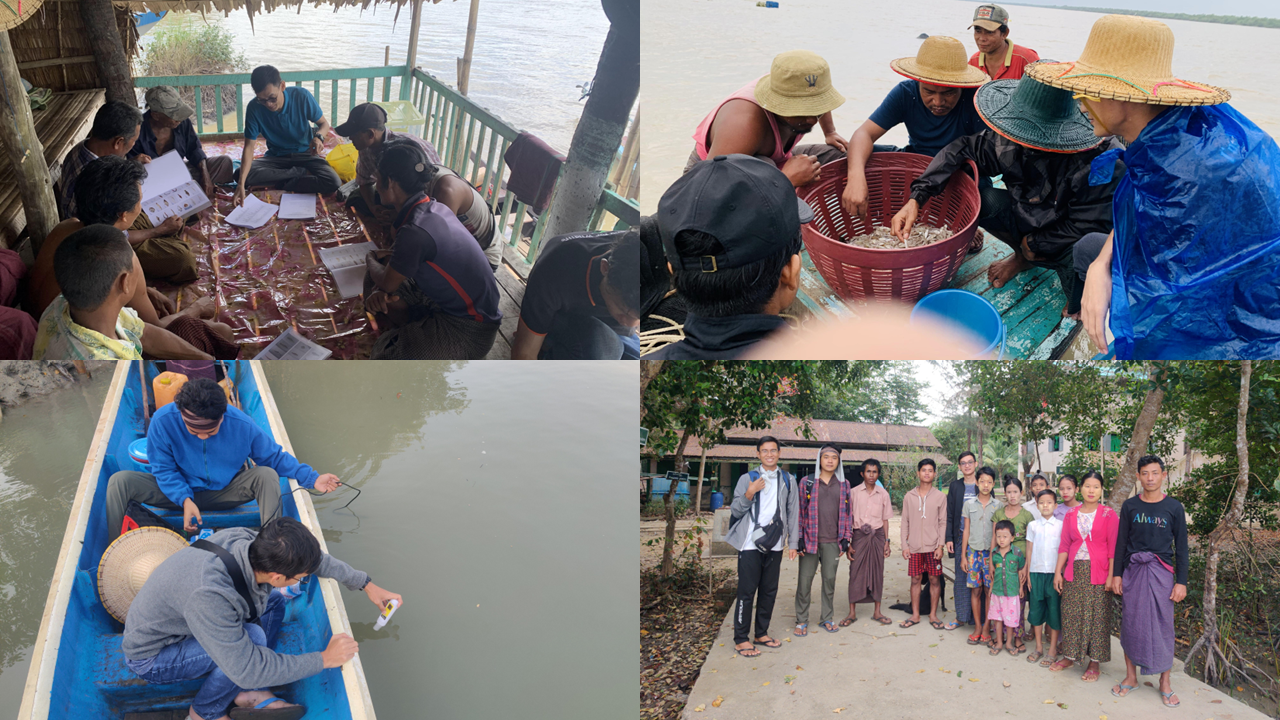
The Irrawaddy mangrove ecosystem in Myanmar is a crucial habitat for aquatic biodiversity, yet its ecological dynamics remain understudied. This research explored the seasonal variation, spatial dynamics, and trophic structure of fish assemblages in Pyapon and Bogale townships, Myanmar. Seasonal and market surveys recorded 129 fish species from 64 families, with Mystus gulio, Oryzias dancena, Coilia dussumieri, and Glossogobius giuris dominating the community. Seasonal shifts significantly influenced species diversity. Winter exhibited the highest species richness and diversity, while summer displayed the lowest. Nevertheless, species evenness remained highly stable across all seasons, suggesting a consistently balanced community. Moving beyond basic water parameters, multivariate analyses demonstrated that habitat complexity and food web dynamics are likely key drivers of community structuring. Permutational multivariate analysis of variance revealed a highly significant spatial separation of fish assemblages between mangrove and agricultural land habitats. Furthermore, indicator species analysis identified specific taxa driving this divergence, while functional feeding guild analysis revealed a marked dominance of benthivores and detritivores in mangrove sites. This highlights the critical role of mangrove-derived organic matter in supporting the estuarine food web. The presence of four threatened species, including the Endangered Eleutheronema tetradactylum and Johnius macrorhynus, demonstrates that preserving the physical integrity and trophic inputs of mangroves is paramount for sustaining estuarine fish diversity and supporting sustainable local fisheries management.
View More



 【NEWS CHINA】Researcher Wu Fei speaks with NewsChina about his work developing standards for Yunnan’s birdwatching industry that aim to deliver standardized, inclusive and long term sustainable growth
 After Dark at the Museum: A Night of Science and Discovery
 National Key Laboratory Charts Future Directions at Annual Academic Committee Meeting
 KIZ and CUHK Joint Laboratory Holds 2026 Annual Academic Exchange